
Years ago, I remember working at a restaurant when one of my managers said something that has stayed with me ever since.
"You guys set the tone of the restaurant. If you welcome them, they'll feel welcomed. But if you go to that table carrying your problems, that table will become a problem."
Now, I couldn't tell you everything that happened during that shift, but I remember those words.
Because what my manager was teaching us had very little to do with taking orders or delivering food. It was about the responsibility we have for how people experience us.
One of my favorite quotes, often attributed to Maya Angelou, says that people may forget what you said or did, but they will remember how you made them feel.
And isn't that the truth?
Whether you're welcoming someone into a restaurant or inviting them into your home, you're setting the tone for their experience.
When I host, I want my guests to feel that everything was intentional. That I considered their arrival before they ever walked through the door. That the music, the lighting, the flowers, and even the smallest details were chosen with them in mind.
Because hospitality starts within the heart.
And the atmosphere is one of the first ways we express it.
Every Gathering Needs Its Own Personality
Before I start pulling out dishes or deciding which flowers to purchase, I ask myself one question:
What kind of feeling are we trying to create?
Is this a dinner party where the girls are dressed up and the wine is flowing? Is it an intimate evening where conversation takes center stage? Or is it a Sunday afternoon where the music is playing, somebody is in the kitchen cooking, and nobody is worried about what time they're leaving?
Every gathering deserves its own personality.
And once you understand that personality, the details begin to make sense.
For our October gathering, DUO: Sunday Supper, the inspiration was R&B duos.
We wanted the evening to feel soulful, intimate, nostalgic, and a little unexpected.
Think about the feeling of putting on your favorite R&B record. You recognize the first few notes, and suddenly you're transported somewhere else.
That was the feeling I wanted to bring to the table.
Setting the Table: The Story Behind DUO
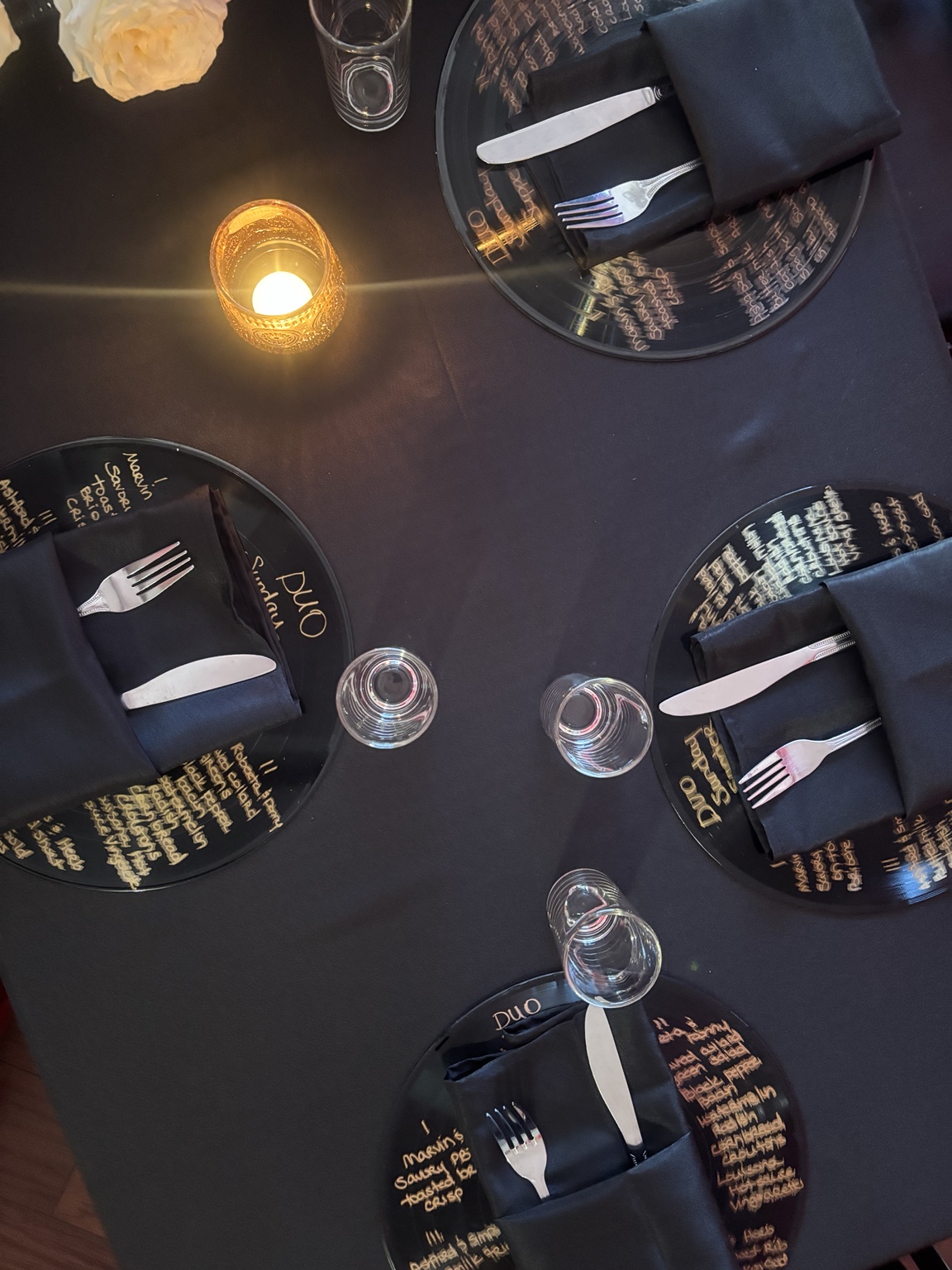
For this dinner, I wanted the table to feel dramatic without being overwhelming. Intimate without being too formal. Beautiful without losing the familiarity of Sunday supper.
So let's talk about what we did.
The Foundation: Black on Black
We started with black table linens and black napkins.
I love the richness of black, especially when creating an intimate dining experience. It gives the table depth and allows the other elements to stand out without competing.
But there was also something intentional about keeping the foundation simple.
With five courses being served throughout the evening, I wanted the table to feel cohesive from beginning to end.
The black linens gave us that consistency.
Instead of introducing multiple colors and patterns, we allowed the texture of the linens, the dinnerware, and the decorative details to create interest.
Sometimes the most effective design decision is knowing what to leave out.
The Statement: Vinyl Records as Menus (And a Lesson Learned)
Now, this was one of my favorite details, and also one of my biggest lessons from the evening.
Because DUO was inspired by R&B duos, I wanted the music to be represented in more than just the playlist.
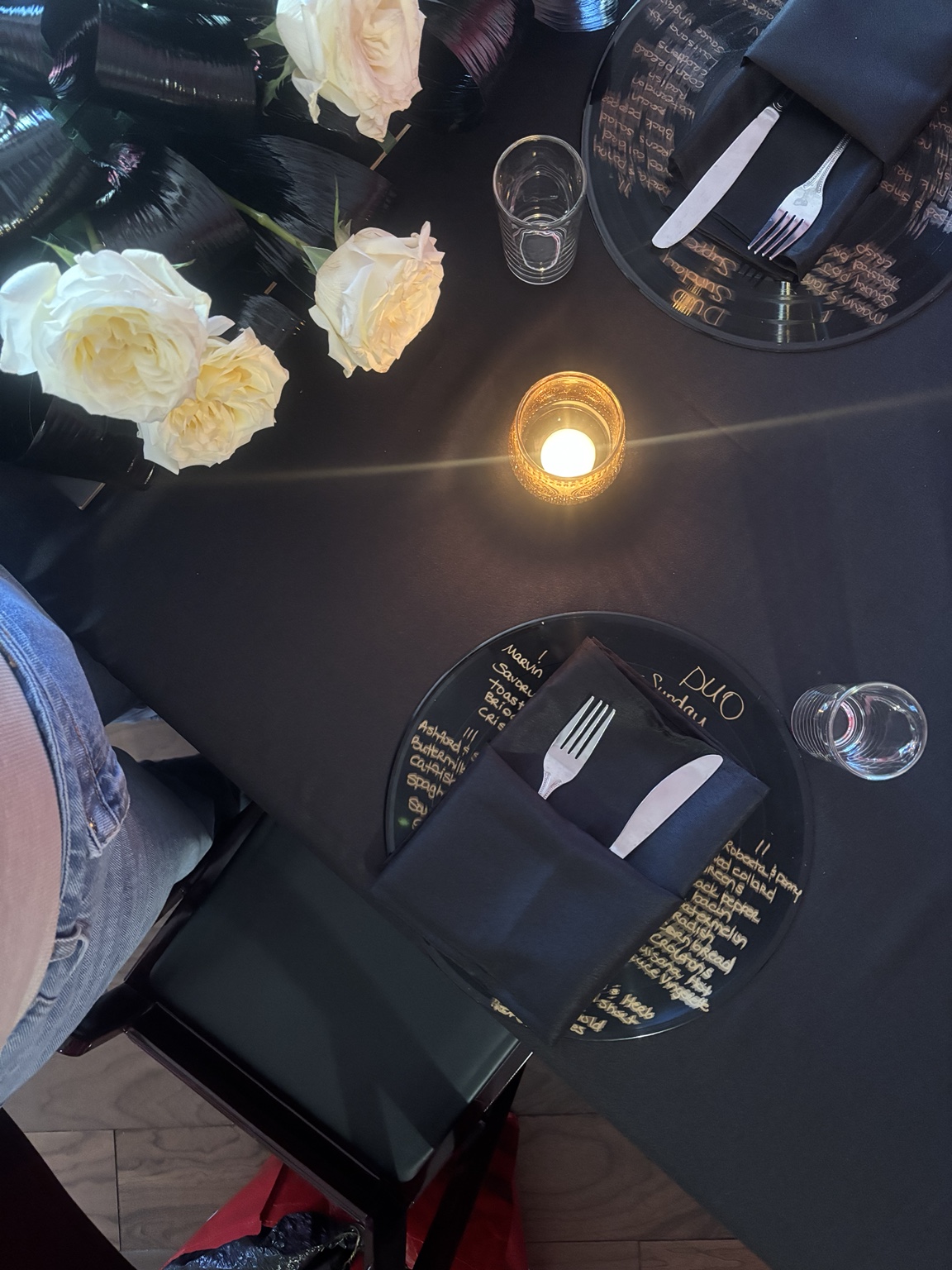
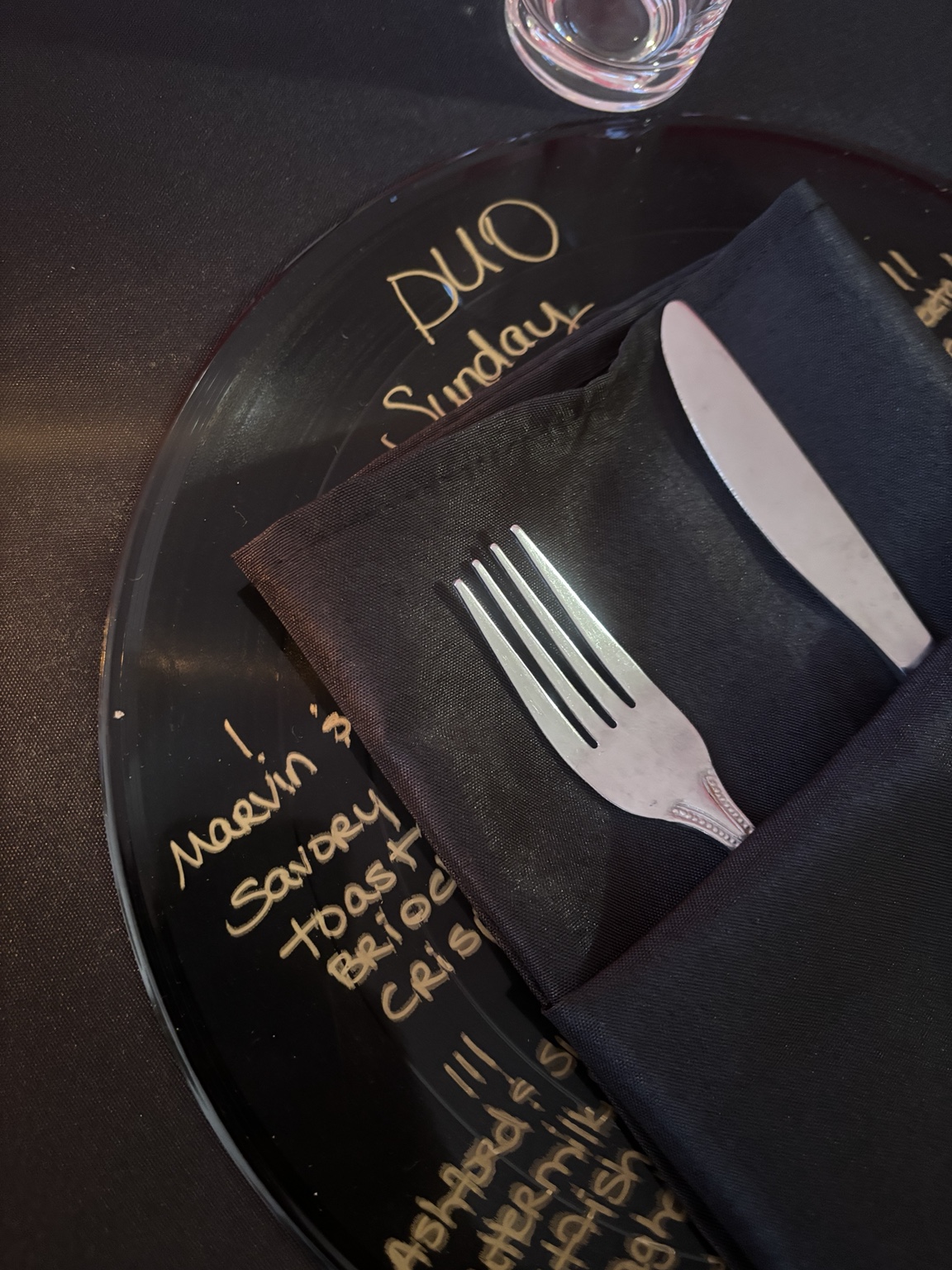
So I decided to use actual vinyl records as menus, with each course handwritten in gold.
And girl, the idea was beautiful.
The black vinyl against the gold lettering photographed beautifully. It felt nostalgic, personal, and connected to the story we were telling. It was exactly the kind of unexpected detail I love bringing into an experience.
But here's what the photographs won't tell you.
The lettering bled.
What looked beautiful when I first created it didn't hold up the way I expected. The writing began to bleed across the vinyl, making parts of the menu difficult to read.
And that's something I hadn't anticipated.
Now, I've spent years working in hospitality and floral design. I've created experiences, styled tables, and worked behind the scenes long enough to understand the importance of details.
But even with that experience, I still encounter things I haven't tried before.
And this was one of them.
The concept worked beautifully from a creative perspective, but the execution needed more thought.
Because a menu isn't just a decorative element.
It has a job to do.
Guests need to be able to read it.
And if the presentation gets in the way of that, then no matter how beautiful the idea is, there's an opportunity to improve.
Looking back, I would have tested the writing material on the vinyl ahead of time, allowed it to sit, and checked whether the lettering remained legible after handling.
I still love the concept, and I would absolutely revisit it. But next time, I would approach the materials differently.
That's one of the things I appreciate about creating these experiences. Every gathering teaches me something.
Sometimes the lesson is about timing. Sometimes it's about the flow of service. And sometimes it's about realizing that a beautiful idea needs a little more testing before it makes its way to the table.
Because good hospitality isn't about getting every detail perfect. It's about making sure the details actually serve the people you're welcoming.
The Details Are Important, But Perfection Isn't the Point
Recently, I started reading Unreasonable Hospitality by Will Guidara, and it's making me reconsider how I approach the experiences I create.
One thing I'm beginning to understand is that perfection and hospitality aren't necessarily partners.
And that's a difficult lesson for someone who loves the details as much as I do.
I can spend hours thinking about the flowers, the menu, the linens, the lighting, and how everything will look when guests walk through the door.
But what happens when something doesn't go according to plan?
In the case of our vinyl menus, the idea was beautiful, but the execution wasn't quite right.
And I had to recognize that.
Because the goal was never simply to create a beautiful photograph. The goal was to create a thoughtful experience for the women sitting around the table.
The details matter. They always will.
But the details are supposed to support the hospitality, not become more important than it.
And I think that's something worth remembering, whether you've been working in hospitality for twenty years or you're hosting your very first dinner party.
You're going to make mistakes.
Something may not look the way you envisioned. A dish may take longer than expected. A centerpiece may need to be moved. A menu might not hold up the way you planned.
But none of those things automatically means the experience has failed.
What matters is how you respond, what you learn, and whether you remain attentive to the people you've invited into your space.
I'm learning that I can be intentional without demanding perfection.
I can care deeply about the details without allowing them to consume the entire experience.
And perhaps most importantly, I can give myself permission to continue learning, even as a professional.
Because hospitality isn't about creating a perfect moment. It's about being present enough to make an imperfect moment meaningful.
The Flowers: Beautiful, But Make Room for Dinner
Now, you know I wasn't going to set a table without flowers.
For DUO, I chose white roses to soften the black linens and create contrast against the darker elements of the tablescape.
But let's talk about one of the biggest mistakes people make when designing a table: choosing a floral arrangement that's bigger than the table itself.
And I don't necessarily mean the physical size of the table. I mean the amount of usable space the arrangement takes away from the experience.
This is where understanding your style of service becomes important.
For DUO, our dinner incorporated both plated and family-style service. That meant I had to consider how the table would function throughout the evening, not just how it would photograph before the guests arrived.
With plated service, each course is presented individually. You need enough space for the dishes to be comfortably placed and cleared without disturbing the other elements on the table.
Family-style service is different. Now we're talking about serving dishes being passed around, guests reaching for food, and everyone sharing from the same table.
That requires room.
And if your floral arrangement is taking up half the table, where exactly is the food supposed to go?
Girl, the flowers cannot be the guest of honor when we're trying to eat dinner. 😂
Another detail to consider is height.
You don't want guests leaning around a centerpiece just to have a conversation with the person sitting across from them.
The flowers should complement the experience, not interrupt it.
That's why I wanted our white roses to bring softness and beauty without overwhelming the table.
And this is something I encourage you to think about before choosing flowers for your next gathering.
Consider how the meal will be served. Think about the dishes that need to fit on the table, how guests will interact, and whether the arrangement allows everyone to see and speak comfortably.
Because floral design isn't just about choosing beautiful flowers.
It's about understanding the space, the people, and the experience you're creating.
A centerpiece should bring people together, not become something they have to work around.
The Lighting: Let the Candles Do Their Job
Lighting can completely change the personality of a room.
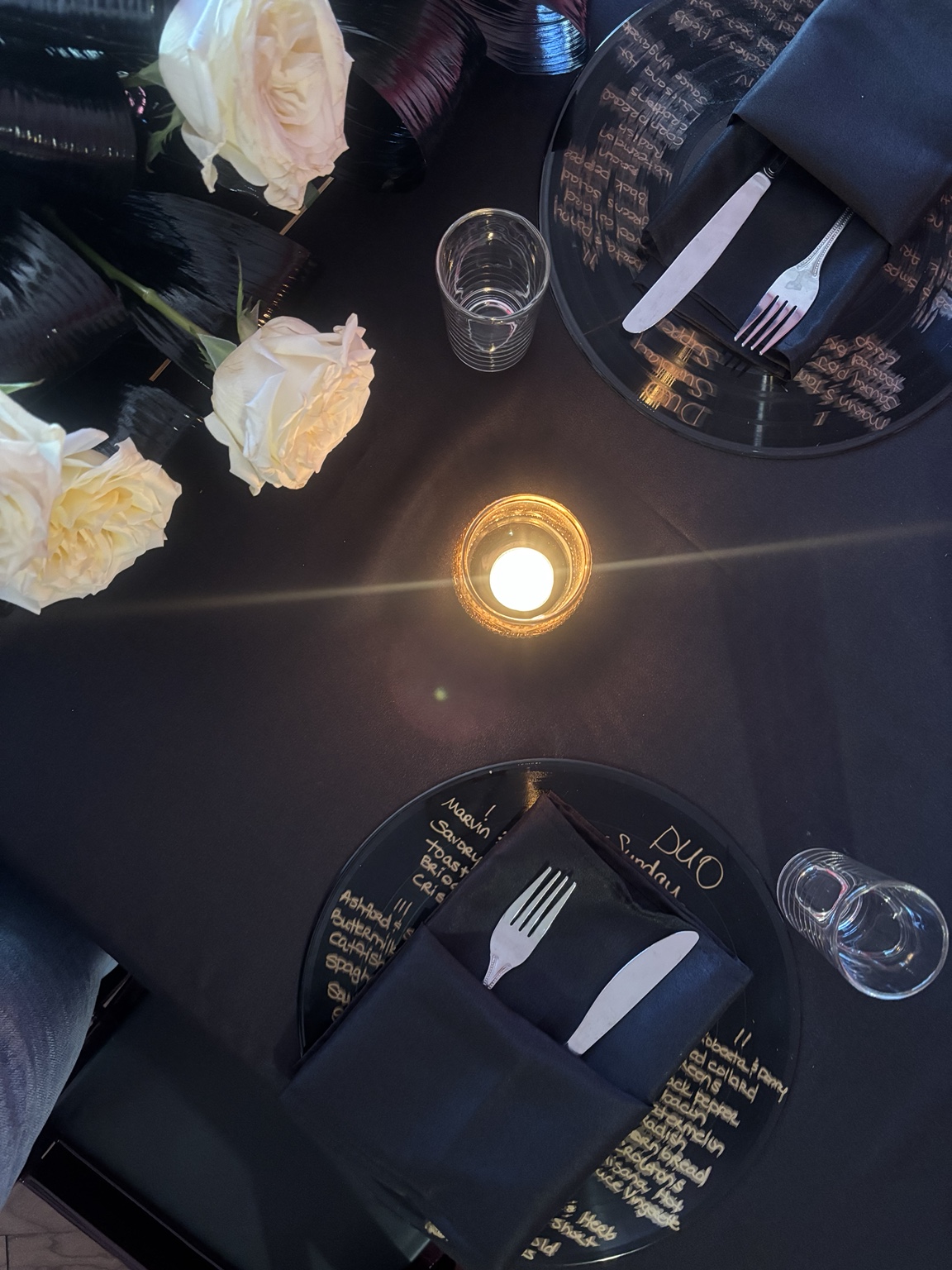
For this dinner, candlelight helped create the intimate atmosphere I wanted.
Against the dark linens, the warm glow softened the setting and gave the table a sense of occasion.
I wanted the room to feel relaxed, not stiff.
And that's something to remember when choosing lighting for a gathering.
Think about what your guests will actually be doing.
Will they be reading menus? Sharing stories? Enjoying a multi-course dinner?
The lighting should support those moments.
You want enough light for everyone to feel comfortable, but you also want to create an atmosphere that encourages people to settle in.
For DUO, the candles were part of that invitation.
The Place Settings: Details That Work Together
The black napkins, silverware, dishes, and menus were arranged to feel intentional without being overly complicated.
I wanted each place setting to feel prepared.
Because there's something meaningful about approaching a table and seeing that someone has already made a place for you.
Not an empty chair that someone has to clear.
Not an extra setting being assembled at the last minute.
A place that was waiting for you.
And when you're hosting, that matters.
Your guests shouldn't have to wonder where they belong.
Even something as simple as a thoughtfully arranged place setting communicates that their presence was anticipated.
The combination of plated and family-style service also meant thinking about how the table would change throughout the meal. Plates needed to be placed and cleared, serving dishes needed room, and guests needed to move comfortably without disturbing the flowers or candles.
A table should be designed for the entire experience, not just the photograph taken before dinner begins.
The Music Was Part of the Decor, Too
One thing I never want us to overlook when discussing atmosphere is music.
For DUO, the R&B inspiration extended beyond the vinyl menus.
The soundtrack was part of the story.
Music has a way of making a room feel familiar, even when the people sitting around the table are meeting for the first time.
A song can spark a memory. Start a conversation. Make somebody laugh or sing along.
And those moments are part of the hospitality experience.
When you're planning your next gathering, think about what the room should sound like, not just what it should look like.
Because the atmosphere isn't created by decor alone.
It's created by everything your guests experience.
Beautiful Is Good. Thoughtful Is Better.
Here's what I want you to take away from our DUO table.
We didn't need dozens of decorative elements to create the atmosphere.
We had a clear story, and we allowed the details to support it.
Black linens established the foundation.
Vinyl records connected the table to the musical inspiration.
Gold lettering added warmth and personality.
White roses softened the setting.
Candlelight created intimacy.
And the music brought the entire experience together.
Each decision supported the same feeling.
That's what intentional hospitality looks like in practice.
Not decorating simply because something is beautiful, but understanding why it belongs in the room.
Before You Set Your Next Table
The next time you're preparing to host, don't begin by asking what you need to buy.
Start by asking what you want your guests to feel.
Then think about how you can create that feeling through the details.
Maybe your gathering calls for bright colors, playful flowers, and music that makes everybody dance.
Maybe it's a quiet dinner with soft lighting, beautiful dishes, and a playlist that encourages conversation.
Or maybe it's an old-fashioned Sunday supper with familiar recipes, mismatched plates, and somebody telling you to fix another plate before you leave.
There's no single formula.
The beauty of hospitality is that it can look different in every home and at every table.
What matters is the intention behind it.
One Last Thing Before You Go
I keep coming back to what my manager said all those years ago.
You set the tone.
And whether I'm serving someone in a restaurant or welcoming women into my home for Sunday supper, that lesson still guides how I approach hospitality.
I want the table to be beautiful.
I want the food to be memorable.
I want the music to be good.
But more than anything, I want the people sitting around that table to feel like their presence matters.
Because the flowers will eventually fade. The candles will burn out. The dishes will be washed and put away.
But the feeling you create?
That can stay with someone long after the evening ends.
The table sets the scene. Hospitality makes the memory.
With warmth,
Ronisha Arlene
Floral & Spice
Home is not a place. Home is a feeling we create for one another.